
Ragnar C, up close
One robot for the light, repetitive work inside a building: paint, sand, drill, mark, install small parts and check the result.
The machine
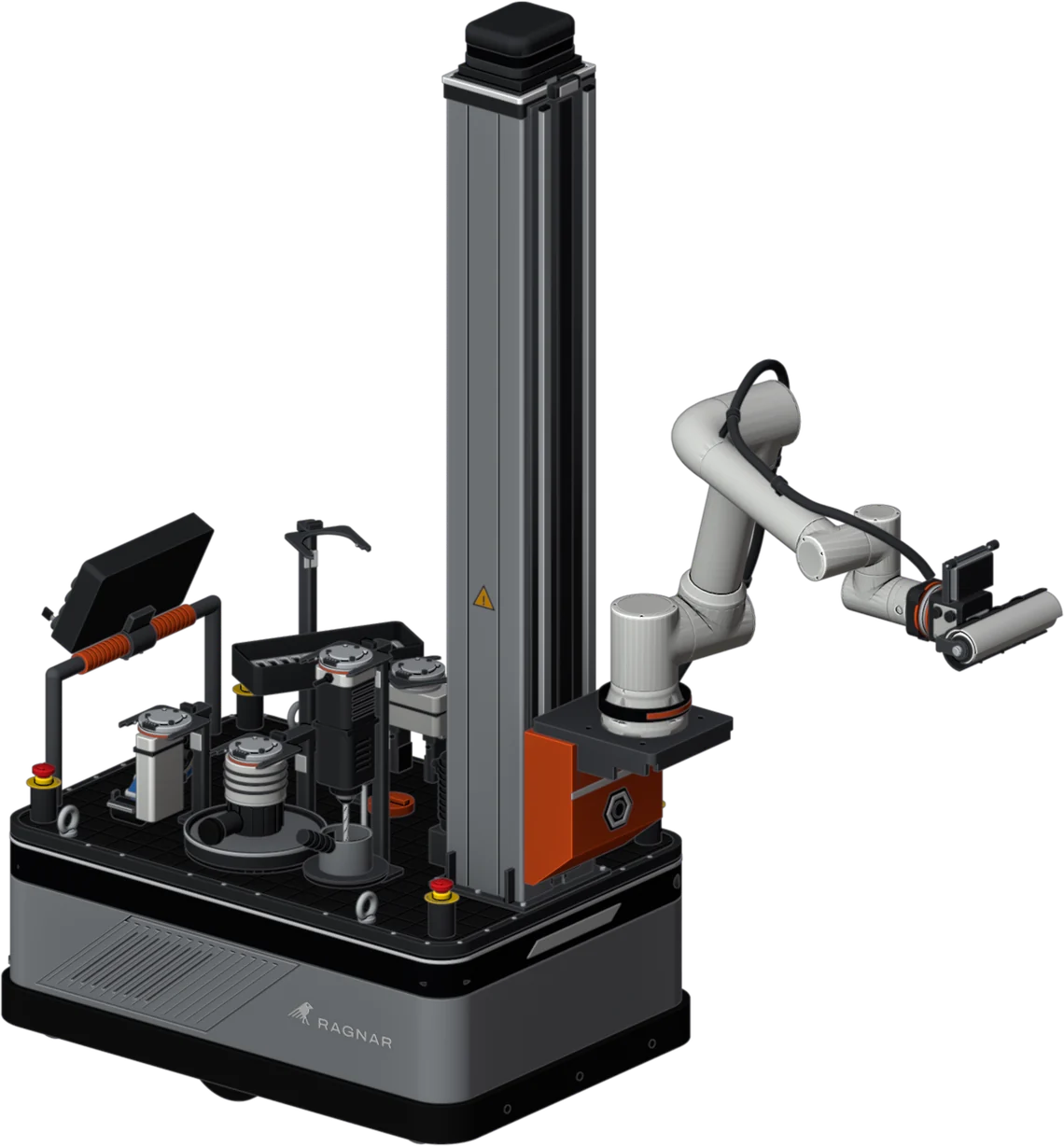
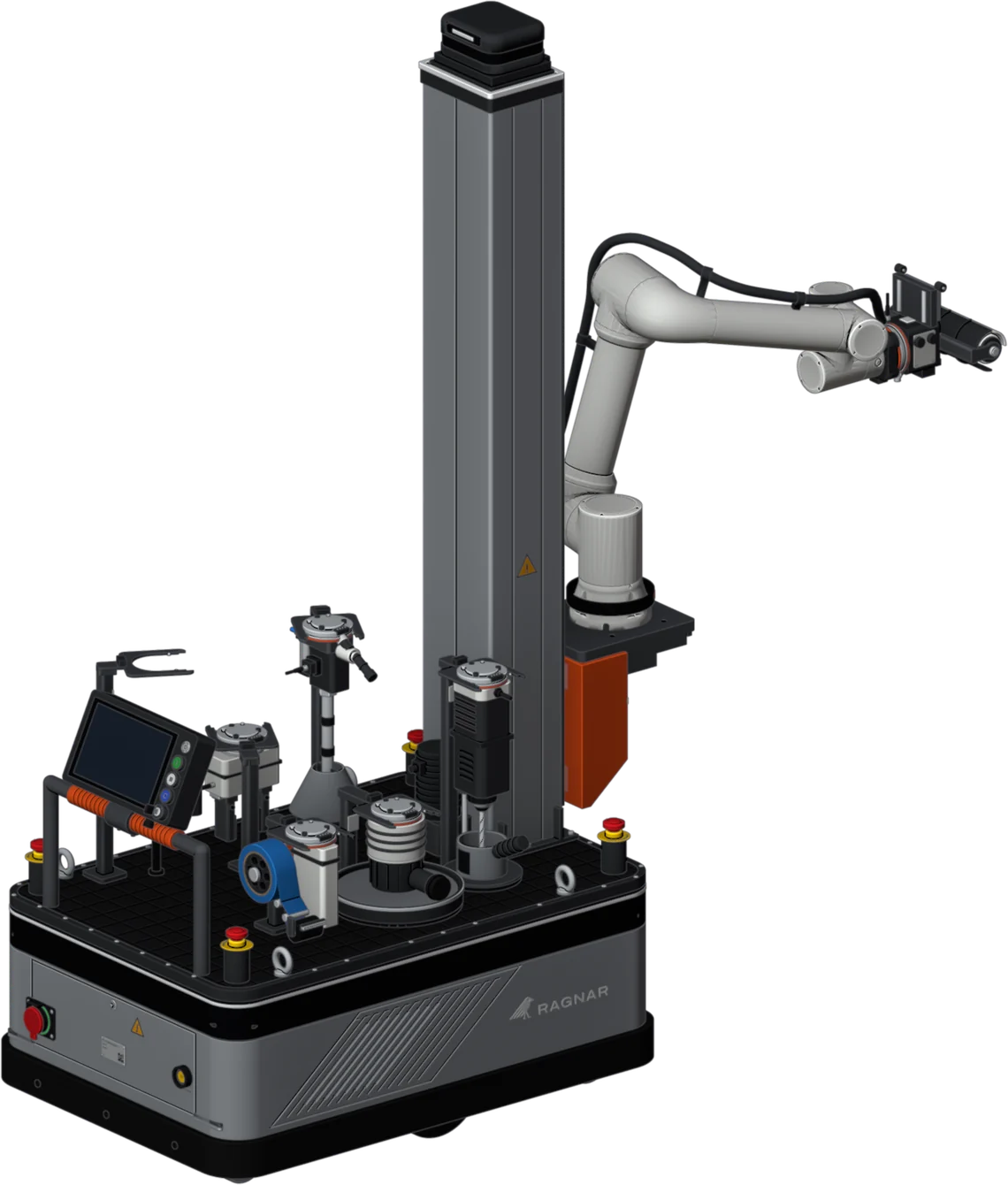
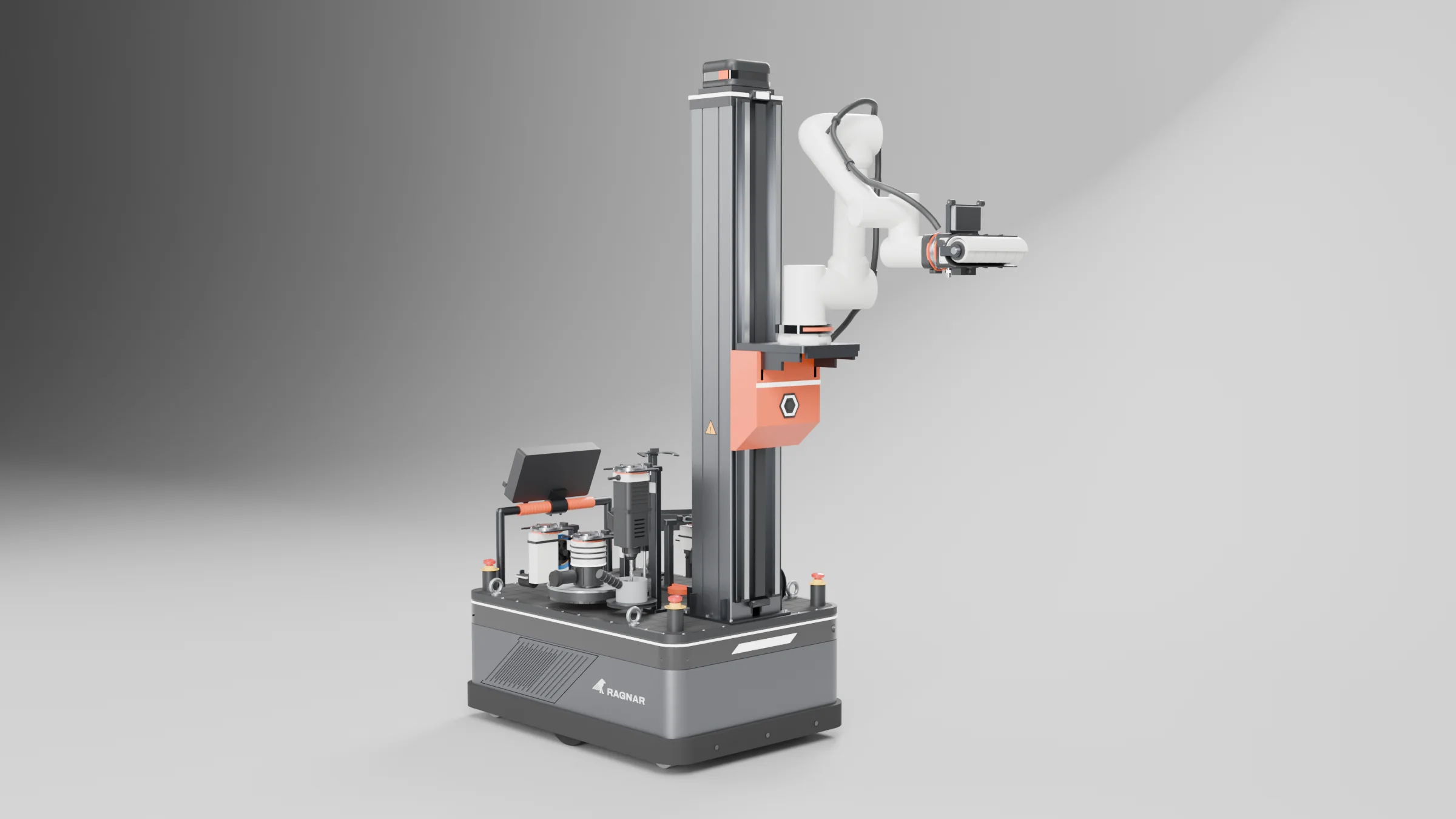
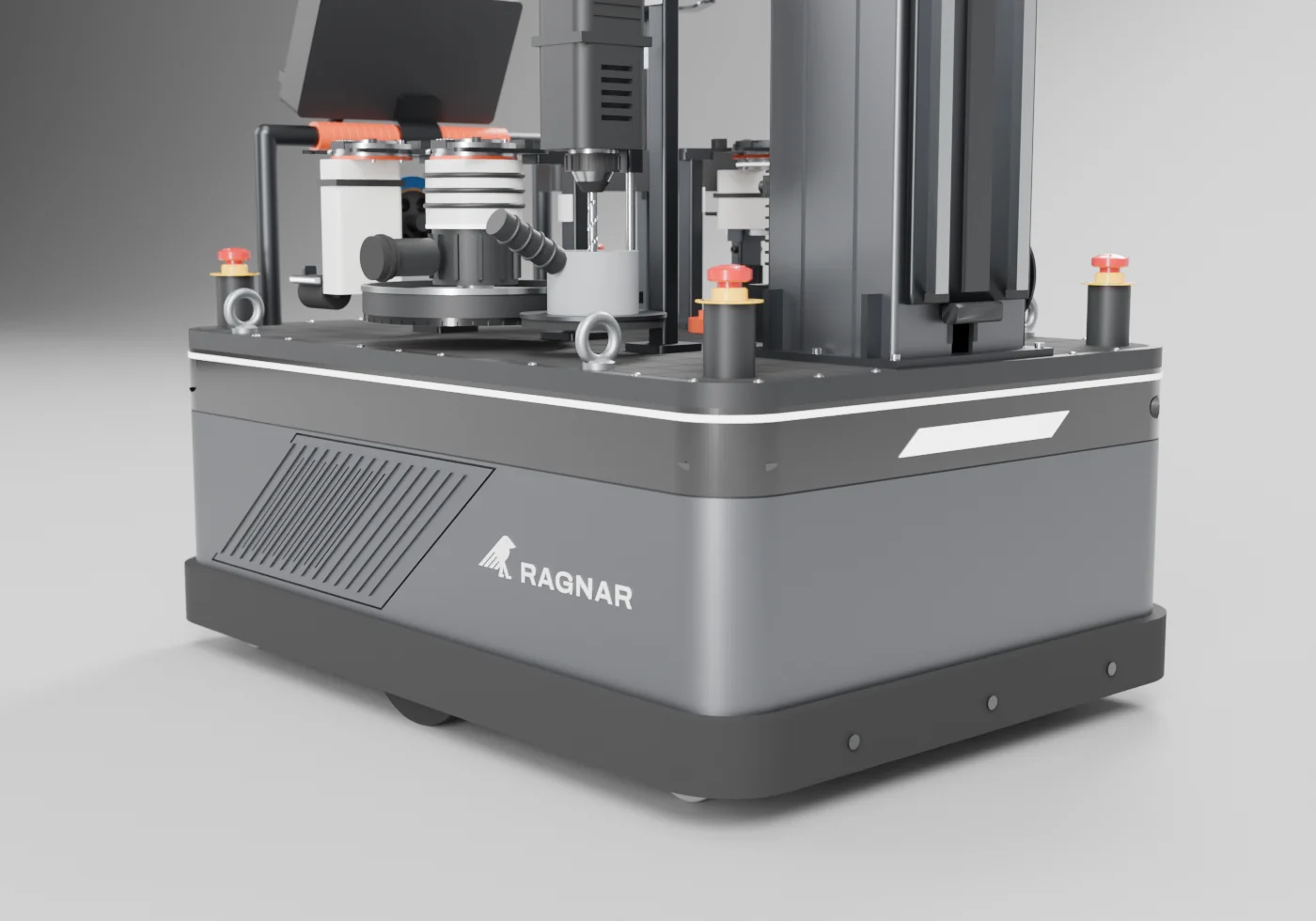
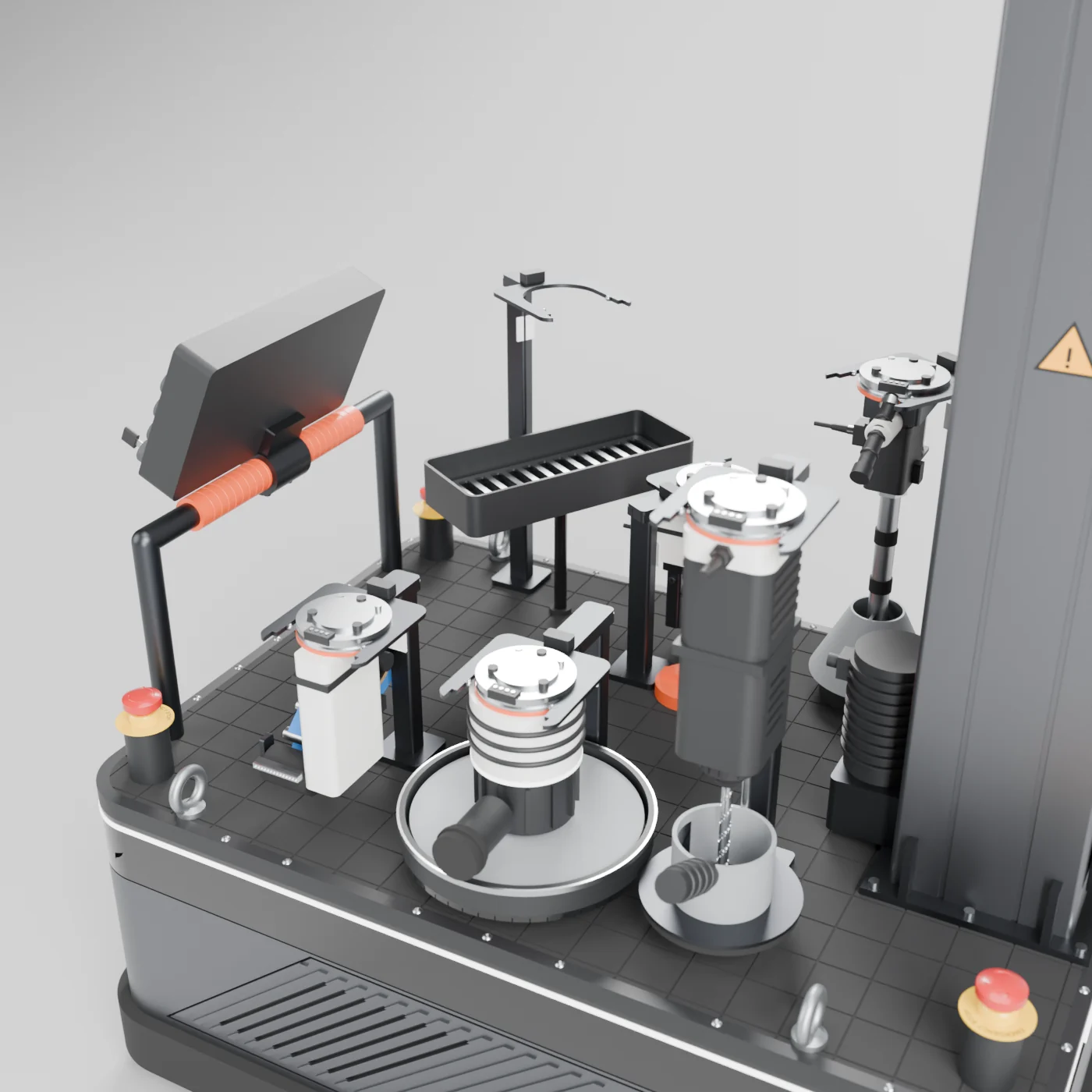
A base on two hub motor wheels, a two stage mast and a six axis arm. The base carries the paint, the battery and six tools; the mast lifts the arm; the arm swaps tools on its own.
- Wall reach From the baseboard up, with the mast raised
- 12 ft
- Height, stowed Fits under an 80 in door
- 78.5 in
- Weight Empty; about 350 lb with a full paint tank
- 325 lb
- Tools Swapped at the docks on the deck
- 6
- LiDAR. On top of the mast, it maps the room and finds walls, doors, trim and people.
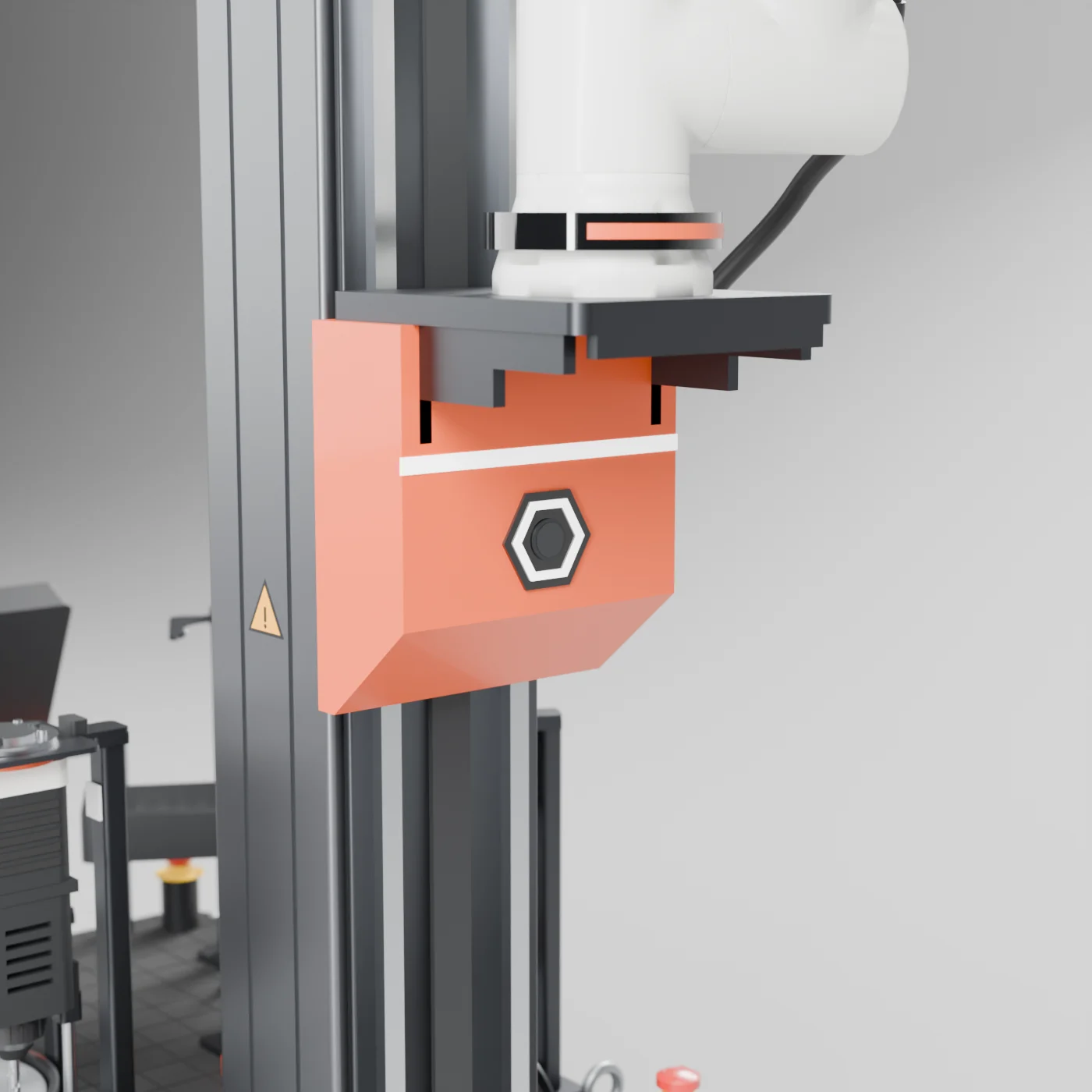
- Two stage mast. Stows at 78.5 in and lifts the arm so tools reach 12 ft walls and 13 ft ceilings.
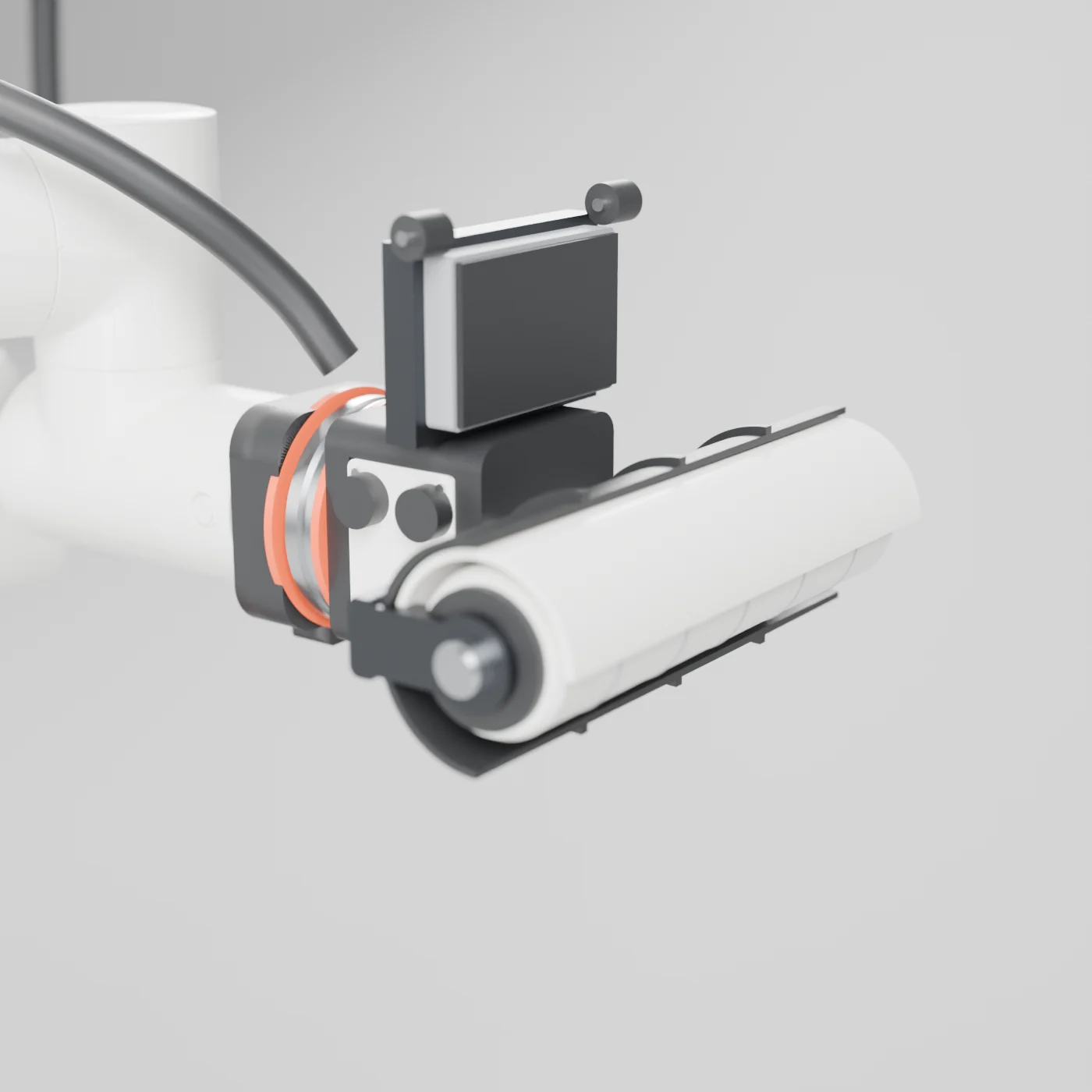
- Fairino FR5 arm. A six axis collaborative arm with 11 lb payload and 36.3 in reach, the same arm as Ragnar M.
- Tool changer. Passes paint, air, vacuum and signals to the tool, and holds it without power.
- Tool station. Six docks on the deck: roller, sprayer, sander, drill, gripper and tape.
- Base. Two hub motor wheels and four casters. A lidar behind the glass band at the front stops it for obstacles.
The details
The parts that do the work, up close.
Dimensions
The side, front, rear and top views are at the same scale, with the mast stowed.
Target specifications
Size and weight
- Footprint
- 28 by 41 in (0.72 by 1.04 m) with the bumper; fits a 36 in door
- Height, stowed
- 78.5 in (2.0 m); fits under an 80 in door
- Work height
- Walls to 12 ft (3.7 m), ceilings to 13 ft (4.0 m)
- Weight
- About 325 lb (147 kg) empty, 350 lb (159 kg) with a full tank
Motion
- Drive
- Two hub motor wheels and four casters
- Lift
- Two stage telescopic mast; the arm carriage travels 7.3 ft (2.2 m)
- Arm
- Fairino FR5, 11 lb (5 kg) payload, 36.3 in (922 mm) reach
Tools and paint
- Tools
- Paint fed roller with edger pad, sprayer, sander with dust extraction, rotary hammer with vacuum clamp, gripper with palm camera, tape applicator
- Tool change
- Automatic, at six docks on the deck
- Paint
- 2.6 gal (10 L) tank and pump in the base
Power and sensing
- Power
- One battery pack, swapped through the rear door
- Sensing
- 360 degree LiDAR on the mast, a 2D lidar and a depth camera on the base, a front camera on the carriage, a wrist camera and a color sensor
- Operator
- 10 in screen on the handle, plus a tablet
Talk to us
Tell us about your building and we will call you when Ragnar C is ready to work.